
Frontier Organics, LLC
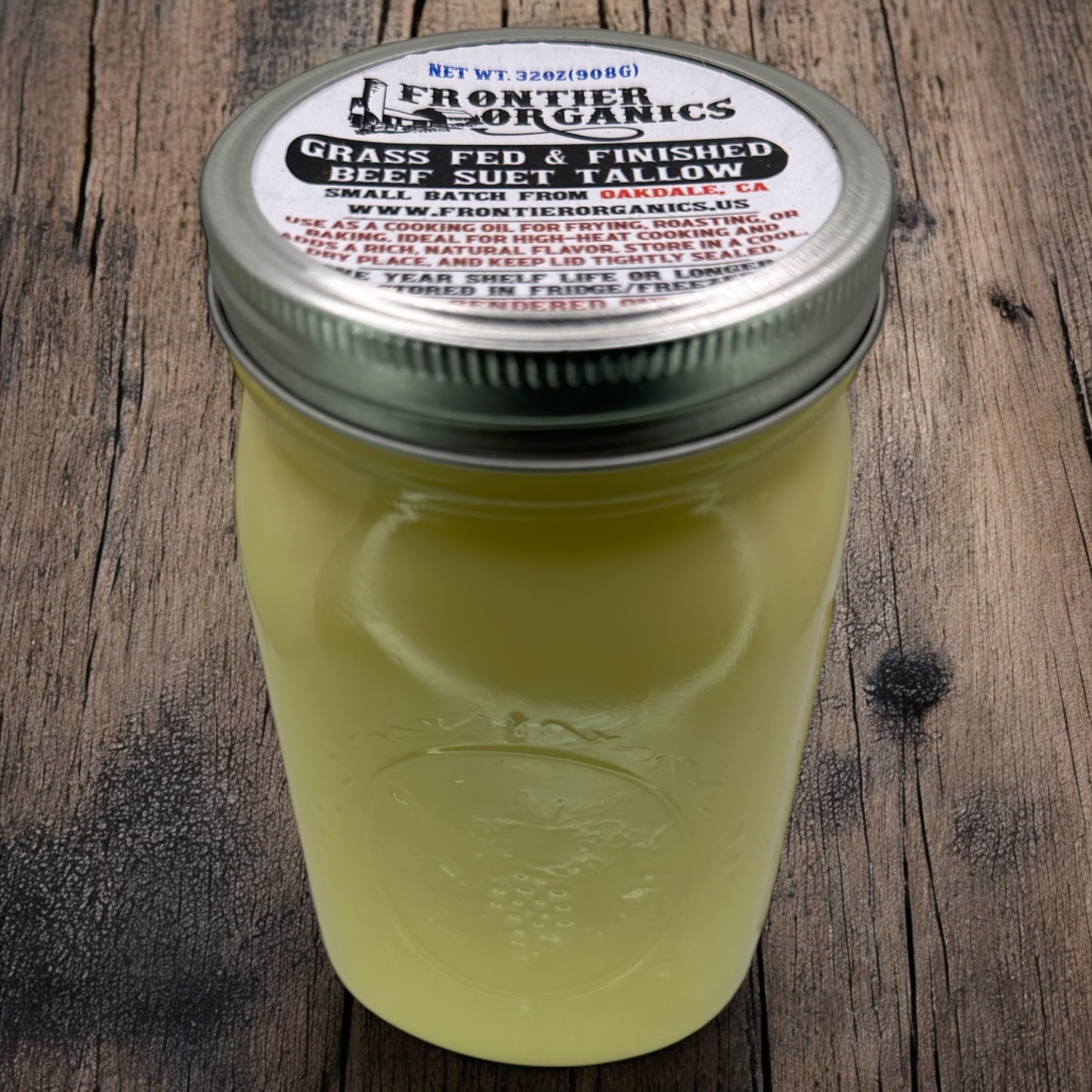
Grass-Fed & Finished Beef Suet Tallow
Grass-Fed & Finished Beef Suet Tallow
Couldn't load pickup availability
Pure rendered grass-fed beef tallow, for the kitchen and the mixing bowl. Slowly dry-rendered from the kidney suet of regeneratively raised California cattle — never muscle fat, never feedlot beef, never antibiotics or hormones. The same tallow we use in every Frontier Organics balm and cream, now sold unmixed for cooking, baking, seasoning cast iron, or making your own skincare at home.
Who this is for
- Home cooks ditching seed oils and looking for a stable, traditional fat
- Carnivore, keto, and ancestral-diet followers who understand the seed-oil problem
- Bakers working on truly flaky pie crust, biscuits, and savory pastries
- Cast-iron enthusiasts looking for the best seasoning fat
- DIY skincare makers who want a proven tallow base for their own balms, salves, and soaps
- Homesteaders making candles, traditional soap, or leather conditioners
- Carnivore-diet parents looking for clean cooking fat for their kids
- Anyone whose grandmother cooked everything in tallow or lard and wants to do the same
Our sourcing, in detail
We make tallow the way it's always been made — slowly, from the right part of the animal, with no shortcuts.
- Kidney suet only — the hard, pure fat from around the kidneys. The highest-quality rendering suet. Never muscle fat, back fat, or trimmings, which produce softer, less stable tallow.
- Grass-fed AND grass-finished — cattle graze open pasture from birth to harvest. Never grain-finished in a feedlot for the last 90 days (which is how most "grass-fed" beef actually works).
- Regenerative California ranches — our flagship partner is a 7,500-acre ranch in the Central Valley practicing rotational grazing, soil restoration, and watershed stewardship.
- No antibiotics, no growth hormones, no synthetic inputs — ever, throughout the cattle's life.
- Rendered in small batches — slowly dry-rendered at low heat to preserve the fat-soluble vitamins (A, D, E, K) and the natural fatty-acid profile.
In the kitchen
- High-heat cooking — smoke point around 400°F. Stable for deep frying, searing, roasting, sautéing, pan-frying, and wok cooking. Won't oxidize or produce the aldehydes that make seed oils problematic under heat.
- Frying and roasting — the tallow French fry is legendary for a reason. Crispy, deeply flavored, and something no vegetable oil can replicate. McDonald's fried in beef tallow until 1990.
- Baking — makes the flakiest pie crusts and biscuits of any fat. Substitute 1:1 for butter or shortening in most recipes; reduce sugar slightly to avoid over-browning.
- Cast iron seasoning — polymerizes beautifully into a hard, non-stick surface. Better seasoning than vegetable oils and won't go rancid.
- Pan-greasing — rub on griddle surfaces, baking sheets, and grills before cooking.
- Savory depth — adds a rich, umami flavor that enhances beef, root vegetables, potatoes, and baked goods
- Tallow-based condiments — compound butters, spreads, and sauces
For DIY skincare and homesteading
- Homemade balms and salves — this is the same tallow base we use in every Frontier Organics balm. Use our Honey Tallow Balm ratio as a template (tallow + beeswax + a carrier oil + essential oils) to make your own blends.
- Traditional cold-process soap — tallow makes a hard, long-lasting, creamy-lathering bar
- Leather and boot conditioner — softens, waterproofs, and preserves leather (the traditional conditioner before synthetic mink oil)
- Candle base — burns clean with a subtle warm aroma
- Wood furniture conditioning — rub into raw wood for a traditional protective finish
Tallow vs. commercial cooking oils
- Heat stability — tallow is chemically stable at high temperatures. Seed oils (canola, soybean, corn, sunflower, safflower, cottonseed) oxidize rapidly when heated and produce compounds like 4-hydroxynonenal (4-HNE) that many researchers consider problematic.
- Processing — tallow is rendered with heat. Commercial seed oils are extracted with chemical solvents (often hexane), then deodorized, bleached, and preserved.
- Fatty-acid profile — tallow is approximately 50% saturated, 42% monounsaturated, and 4% polyunsaturated. Humans evolved eating animal fats; seed oils have only been in the human food supply for ~120 years.
- Shelf stability — tallow keeps for 12+ months at room temperature, even longer refrigerated. No refrigeration required when sealed.
We're not anti-plant-fat. Olive oil, avocado oil, and coconut oil all have their place. But for high-heat cooking, tallow is what your great-grandmother used — and the evidence suggests she was right.
What to expect
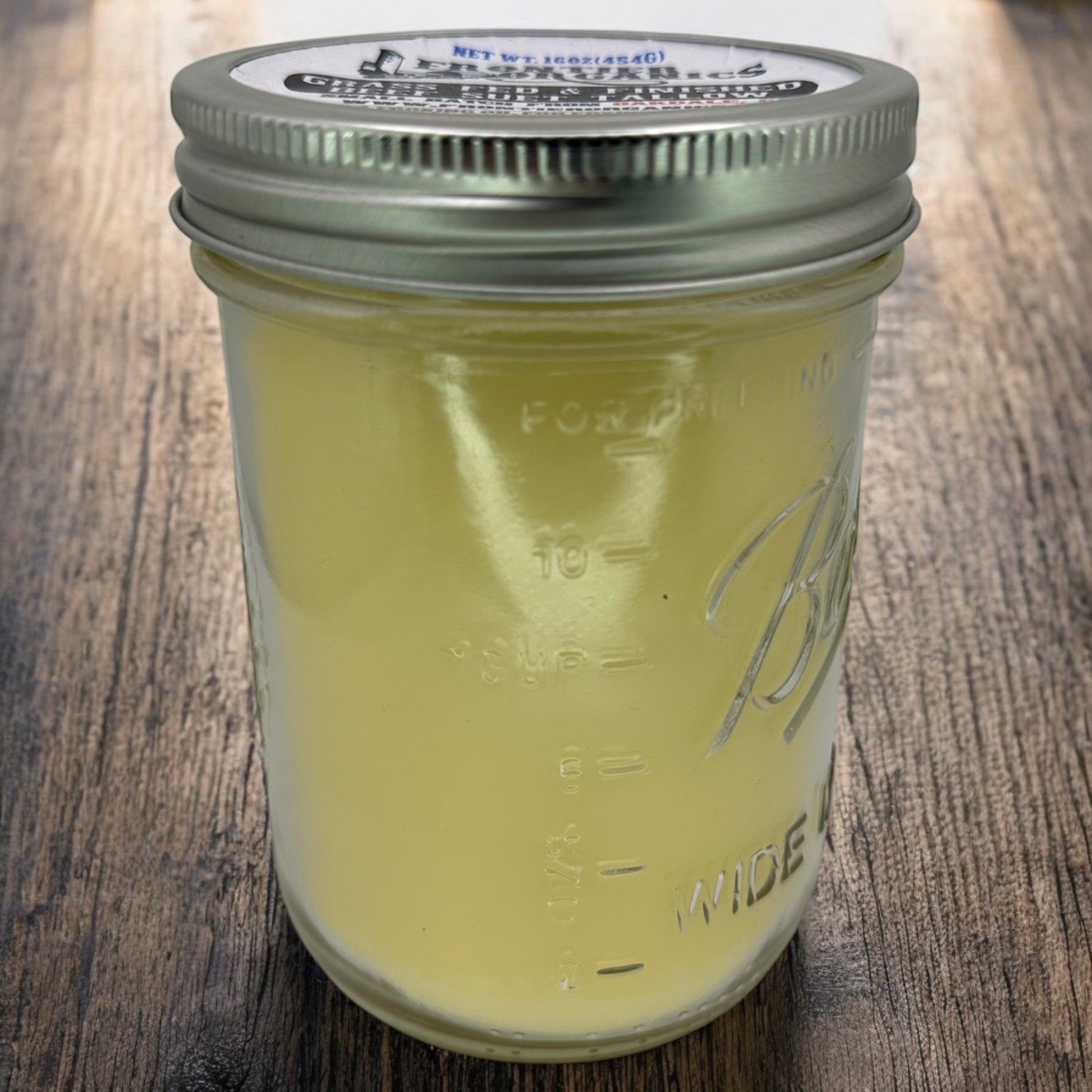
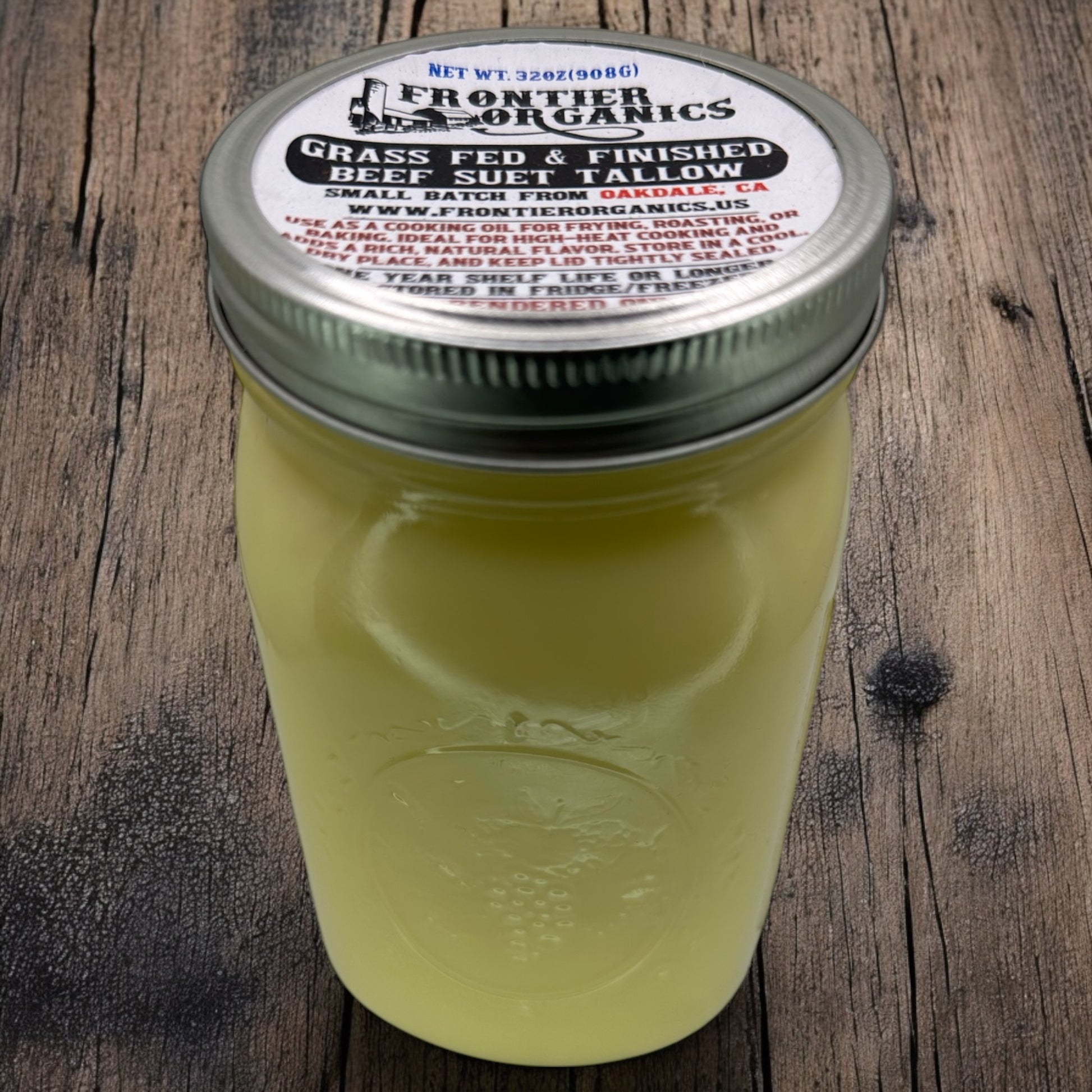
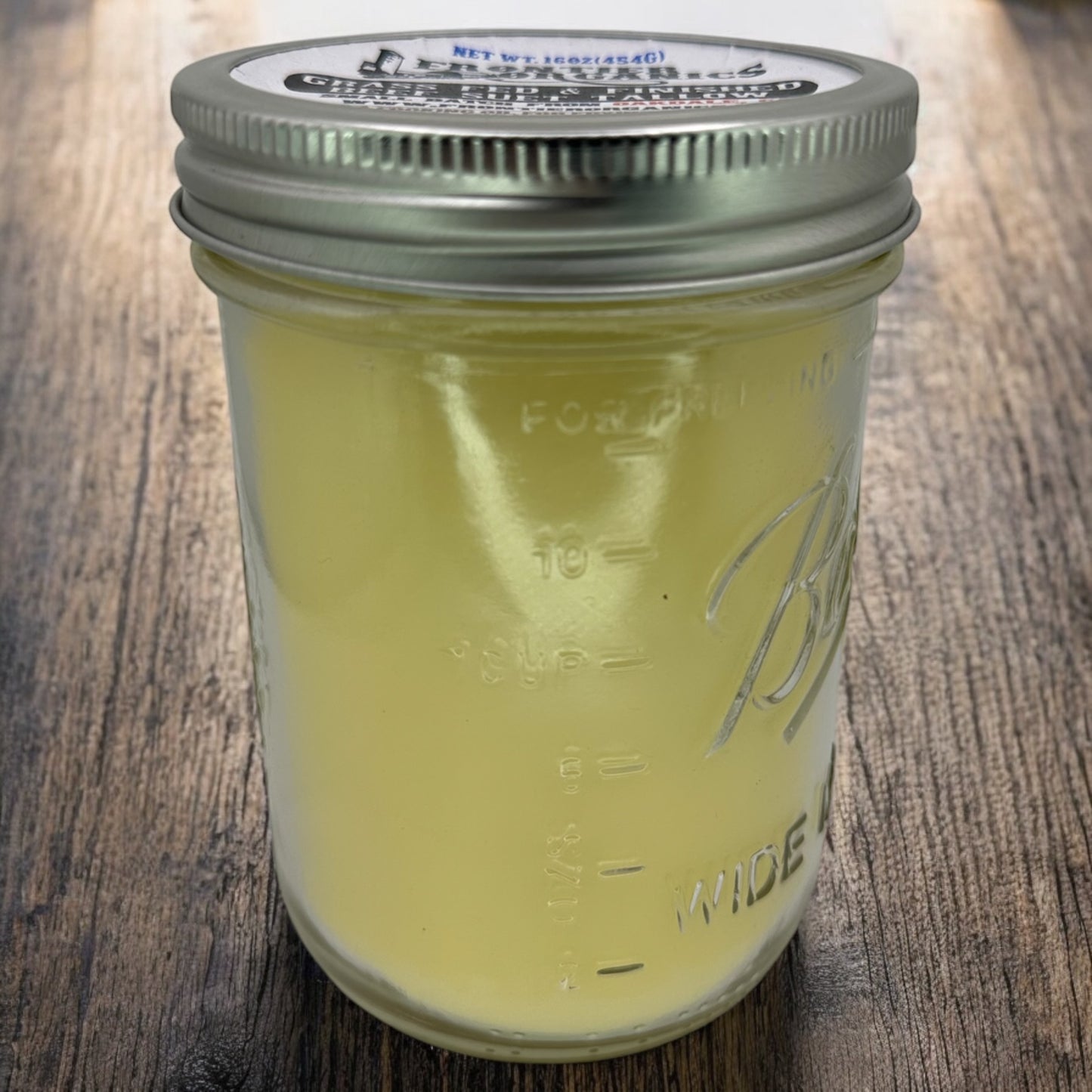
- Color: creamy ivory to pale golden, depending on the season. Grass-fed tallow varies naturally based on the cattle's diet (summer grass = deeper golden hue).
- Texture at room temperature: firm but scoopable, like a slightly softened butter
- Texture when warmed: melts to a clear golden liquid around 95-110°F
- Scent: subtle, clean beef aroma when cold. Nearly neutral when cooking (it does not impart strong flavor; it carries the flavors you add to it).
- Storage: room-temperature pantry shelf for 12+ months, or refrigerate for 18+ months. No refrigeration required but doesn't hurt.
- Signs it's past its prime: if tallow develops a strong rancid smell or significantly darker color, discard. Properly stored, this rarely happens within normal shelf life.
Pairs with
If you're new to tallow skincare, try our Honey Tallow Balm first — see what the finished product feels like before you make your own. If you're already a tallow DIYer, grab additional jars of this raw tallow at quantity; we offer it in multiple sizes for batch cooks and bulk recipe scaling.
The craft — how we render
Tallow quality depends entirely on the rendering method. We use the traditional dry-rendering method: the suet is chopped, slowly heated at low temperature in stainless-steel pots, and the liquid fat is skimmed off and strained through multiple layers of fine cheesecloth. No steam pressure, no chemical solvents, no "purification" chemistry. The result is a tallow with the full nutritional profile your great-grandmother's tallow had — including the fat-soluble vitamins that industrial rendering strips out. Every batch is rendered in small quantities in Oakdale, California.
Ingredients
Grass-fed & finished beef tallow. That's it.
Share
I’ve bought tallow from you guys several times now and I’m always happy with it!
Absolutely amazing for my 9 month old's eczema skin. Keeps the skin barrier in tact, no hive reactions, the most natural helper as we heal his gut. Thank you Frontier Organics!
Everything tastes better when you cook withTallow. Glad I no longer use toxic oils. The quality of the Beef Tallow is excellent. I cooks steaks, burgers and potatoes with tallow now. Flavor is amazing.
Tallow is a chef’s delight. Tallow takes high heat and adds flavor. It makes pans, especially cast iron, easy to clean. I love this particular product, it is consistent. After you fall in love with tallow for cooking check out all the other products they make.
Amazing beside smell